How to Build a Career in Plumbing Design: Skills, Training, and Certification Guide
Plumbing Design Course
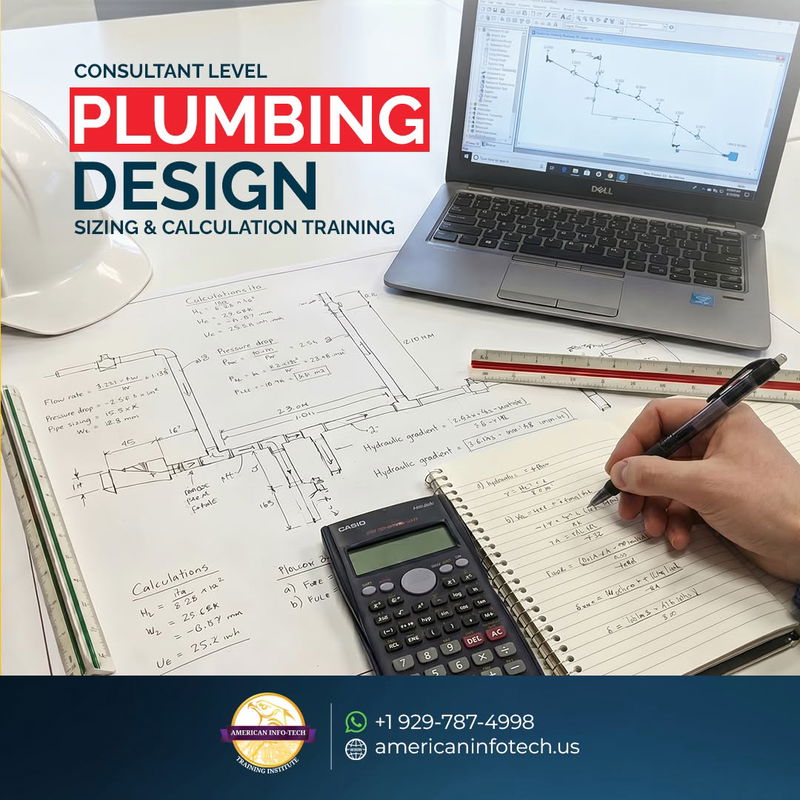
Every building, from a small apartment to a large commercial complex, depends on a well planned plumbing system. Water needs to reach the right place at the right pressure, and wastewater needs to leave safely and efficiently. Behind every one of these systems is a plumbing designer who has planned the layout long before construction even begins.
If you are a plumbing technician, civil, mechanical, or electrical engineer, an architect, a CAD technician, or a construction professional thinking about moving into design work, plumbing design can be a rewarding and stable career path. This guide walks you through what plumbing designers actually do, the skills you need, and how a structured plumbing design course can help you get there.
What Does a Plumbing Designer Do?
A plumbing designer plans how water supply, drainage, and waste systems will work inside a building. This includes deciding pipe routes, selecting pipe sizes, choosing fixtures, and making sure the entire system follows local plumbing codes.
Unlike a plumber who installs and repairs physical pipework on site, a plumbing designer works mostly with drawings and software tools before construction starts. Their job is to think ahead so the plumber on site has a clear, accurate, and code compliant plan to follow. This makes plumbing design a great next step for anyone who already understands plumbing systems and wants to move from hands on installation work into planning and design.
Why Plumbing Design Is a Smart Career Choice
Construction activity across the United States continues to grow, and every new residential, commercial, or industrial project needs a properly designed plumbing system. A few reasons this field is worth considering include the following.
Plumbing systems are required in every type of building, so the demand for skilled designers does not depend on one single industry.
Smart buildings and green construction projects are increasing the need for efficient water systems, which means designers with updated knowledge are in higher demand.
Plumbing design work often pays better than site based installation roles, since it requires specialized technical knowledge.
It offers a natural career progression for plumbers, civil engineers, and CAD technicians who already understand the basics of water systems and want to move into a design focused role.
Skills You Need to Become a Plumbing Designer
Plumbing design is a mix of technical knowledge and practical thinking. You do not need to be an expert in everything on day one, but a good plumbing design training program should help you build the following skills over time.
Technical skills
Understanding of water supply and distribution design
Knowledge of drainage and sanitary system design
Ability to size pipes, tanks, and pumps correctly
Understanding of hot and cold water system design
Reading and creating plumbing layout drawings
Familiarity with local and international plumbing codes
Practical and soft skills
Attention to detail, since a small error in pipe sizing can cause major issues later
Problem solving when site conditions do not match the original plan
Communication with architects, contractors, and site teams
Time management across multiple projects at once
What You Will Learn in a Plumbing Design Course
A well structured plumbing course usually starts with the fundamentals before moving into more advanced design work. Here is what a complete plumbing design training program typically covers.
Introduction to plumbing systems You start by learning the types and components of plumbing systems, the materials and fixtures used, and the tools involved. This stage also covers local and international plumbing codes, along with the SI and metric units used in design calculations.
Water supply and distribution design This section teaches you how to plan a reliable water supply system, including pipe sizing and layout planning for different types of buildings.
Sanitary system design Here you learn how wastewater is safely collected and removed from a building, along with the standards that must be followed.
Hot water supply design This covers the planning of hot water systems, including equipment selection and pipe sizing for consistent supply.
Stormwater drainage design You will learn how rainwater is managed and drained away from a building to prevent water damage and flooding.
Internal water supply system design This focuses on how water is distributed efficiently within a building, from the main supply line to individual fixtures.
Kitchen and utility plumbing design Since kitchens and utility areas have specific plumbing needs, this section covers the practical design considerations for these spaces.
Plumbing layout drawings Finally, you learn to create and read professional plumbing layout drawings, which is one of the most valuable skills for working with architects and contractors.
A good plumbing design course combines all of these topics with hands on practice, so you are not just learning theory but actually applying it to real project scenarios.
How to Choose the Right Plumbing Training Program
Not every plumbing course offers the same value. Before enrolling, it helps to check a few things.
Does the program include practical, project based training rather than only lectures
Does it cover pipe sizing, drainage design, and layout drawings in depth
Does the syllabus include current plumbing codes and standards
Is the class schedule flexible enough for working professionals
Does the course lead to a recognized plumbing design certification
Taking a few minutes to compare programs before you enroll can save you time and help you choose training that actually prepares you for real project work.
Career Opportunities After Completing a Plumbing Design Course
Once you complete plumbing certification training, several career paths open up. These include roles such as plumbing designer, plumbing design engineer, plumbing consultant, plumbing design project manager, and plumbing inspector.
Plumbing designers are needed across residential, commercial, and industrial projects, which gives you flexibility in the type of work you choose. As more buildings adopt smart and efficient water systems, professionals with updated design skills are likely to see even more opportunities in the coming years.
For engineers, architects, and CAD technicians, this specialization also adds a valuable skill set to your existing background, making you a stronger candidate for broader MEP design roles as well.
Why Choose Infotech USA for Plumbing Design Training
Choosing the right training provider matters just as much as choosing the right course. At Infotech USA, the plumbing design program is built around practical, real world learning rather than just theory.
Here is what sets the training apart.
A complete curriculum covering everything from plumbing fundamentals to advanced layout drawings
Experienced trainers who bring real project knowledge into the classroom
Flexible weekday and weekend class schedules for working professionals
A globally recognized certificate on completion
Career guidance and placement support to help you take the next step
Whether you are a plumbing technician looking to move into design, or an engineer or architect wanting to specialize, the training is structured to meet you at your current level and build from there.
Final Thoughts
Plumbing design is a practical, in demand career that combines technical knowledge with real world problem solving. Whether you are starting fresh or already have experience in plumbing, engineering, or construction, the right training can help you move into a design focused role with confidence.
If you are ready to take the next step, explore the Plumbing Design Course at Infotech USA and start building the skills employers are actively looking for.
Frequently Asked Questions
What qualifications do I need to become a plumbing designer? Most programs accept candidates with a diploma or degree in mechanical, civil, or related fields. Prior plumbing or construction experience is helpful but not always required to start.
How long does it take to complete a plumbing design course? Most structured plumbing design training programs run for a few weeks, with flexible weekday and weekend batches for working professionals.
Is plumbing design a good career choice? Yes. Every construction project requires plumbing design, which keeps demand steady across residential, commercial, and industrial sectors.
Do I need to know CAD software before joining? Not necessarily. A good plumbing design course will teach you the drawing and layout skills you need, even if you are starting with limited software experience.
What is the difference between a plumber and a plumbing designer? A plumber installs and maintains physical plumbing systems on site, while a plumbing designer plans and creates the technical drawings and layouts that guide that installation work.
Can architects and engineers benefit from a plumbing design course? Yes. Understanding plumbing design helps architects and engineers coordinate better with MEP teams and adds a valuable specialization to their existing skill set.
Comments
No comments yet. Be the first to comment!